
table of contents


AI in Healthcare: Applications, Benefits, Challenges & Future Trends (2026)
Introduction
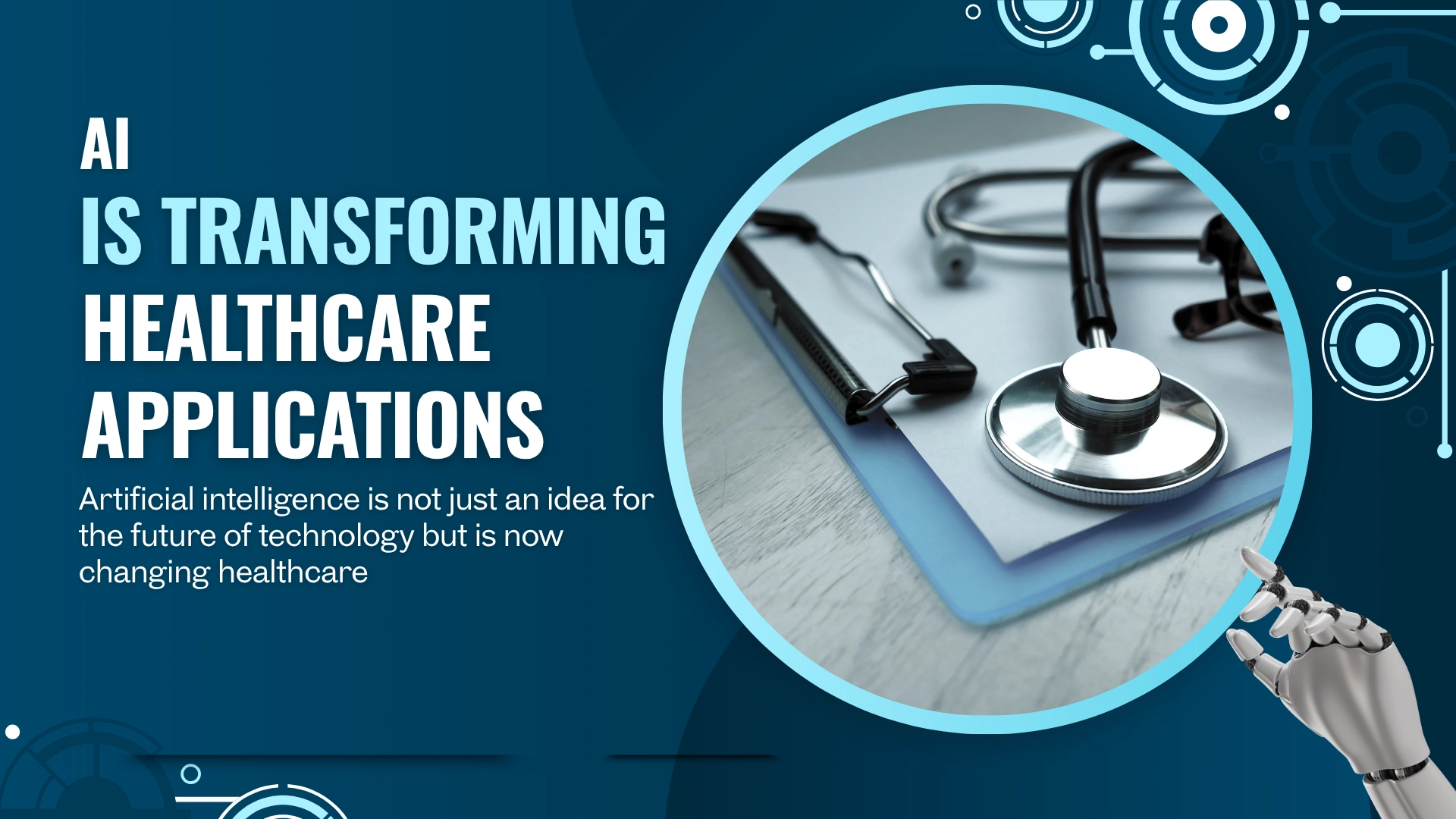
The healthcare industry is under increasing pressure to improve patient outcomes, reduce operational costs, and deliver care more efficiently. As a result, Artificial Intelligence (AI) is rapidly becoming a strategic investment for healthcare providers, hospitals, clinics, and healthtech companies worldwide.
The growing AI in healthcare market highlights how organizations are leveraging AI to enhance diagnostics, automate administrative workflows, optimize resource utilization, and support data-driven clinical decisions. At the same time, conversational AI in healthcare is transforming patient engagement by enabling intelligent virtual assistants, automated appointment scheduling, and 24/7 patient support.
As healthcare organizations continue their digital transformation journey, AI is no longer a competitive advantage, it's becoming a business necessity. But how can healthcare leaders maximize its potential while ensuring security, compliance, and patient trust? Let's explore how AI is reshaping modern healthcare and driving measurable business outcomes.
What is AI in Healthcare?
Artificial Intelligence (AI) in healthcare refers to the use of advanced technologies such as machine learning, natural language processing, and predictive analytics to improve patient care, streamline clinical workflows, and enhance healthcare decision-making. From disease diagnosis and medical imaging to personalized treatment recommendations and virtual health assistants, AI is transforming how healthcare organizations deliver care.
As healthcare systems face growing patient demands, rising operational costs, and increasing pressure to improve outcomes, AI has emerged as a powerful tool for driving efficiency and innovation. Healthcare providers can leverage AI to automate repetitive tasks, analyze large volumes of medical data, detect diseases earlier, and support clinicians with faster, data-driven insights.
The adoption of AI in healthcare is also helping bridge accessibility gaps through telemedicine, remote patient monitoring, and intelligent patient engagement solutions. By reducing administrative burdens and enabling proactive care, AI allows healthcare professionals to focus more on patient outcomes and less on manual processes.
For hospitals, clinics, healthcare startups, and healthtech organizations, AI is no longer a future investment; it is becoming a strategic necessity. As technology continues to evolve, AI-powered healthcare solutions will play a critical role in improving operational efficiency, enhancing patient experiences, and building a more connected, intelligent, and accessible healthcare ecosystem.
Benefits of AI in Healthcare
By analyzing large volumes of medical data and automating routine tasks, AI enables healthcare providers to make faster, more informed decisions while enhancing the overall patient experience.
- Improved Diagnostic Accuracy: AI-powered systems can detect diseases, analyze medical images, and identify patterns with high precision, supporting faster and more accurate diagnoses.
- Enhanced Operational Efficiency: Automation of administrative tasks such as scheduling, documentation, and patient record management reduces workload and improves productivity.
- Cost Reduction: AI helps healthcare organizations optimize resources, reduce errors, and lower operational expenses, making healthcare more affordable.
- Better Patient Engagement: AI-driven virtual assistants, chatbots, and health apps provide personalized support, reminders, and health guidance.
- Expanded Access to Care: Telemedicine and remote monitoring solutions powered by AI make quality healthcare accessible to patients in underserved and remote areas.
- Predictive and Preventive Care: AI can identify health risks early, enabling proactive interventions and improving long-term patient outcomes.
Applications of Artificial Intelligence in Healthcare

Applications of Artificial Intelligence in Healthcare
Diagnostics and Imaging
AI is transforming diagnostics and medical imaging, especially in fields like radiology and pathology. Machine learning algorithms are proving more accurate than human specialists in detecting abnormalities such as tumors, fractures, and neurological issues from medical images like X-rays, MRIs, and CT scans.
By reducing human error and offering second opinions, AI enables earlier disease detection, leading to better patient outcomes. India's diagnostics sector is valued at $55 billion in 2023, is set for rapid growth, expected to reach $98 billion by 2028, positioning AI as a key driver of innovation in healthcare.
PathAI is one example of how artificial intelligence may be used to enhance pathology diagnosis. Physicians may make more informed treatment decisions by using PathAI to improve the accuracy of illness diagnosis in biopsy samples. This results in more accurate and dependable diagnoses. This technology makes the diagnostic procedure more efficient and improves patient care.
Drug Discovery and Development
AI is transforming drug discovery by rapidly predicting drug candidates and their interactions with biological targets, accelerating the development process. This speed allows for quicker responses to emerging health threats, such as new diseases, and helps deliver more personalized treatment options.
AI enhances patient-provider communication, supporting shared decision-making for tailored care. The global drug discovery market is projected to reach $71 billion by 2025, up from $35.2 billion in 2016. The largest segment, small molecule drug discovery, is set to hit $48 billion by 2025, driving significant growth in this innovative field.
A leading example is Insilico Medicine, which uses AI to identify promising drug candidates and optimize the entire drug development process. Their technology reduces the time and cost associated with traditional research, bringing innovative treatments to market faster and improving healthcare outcomes overall.
Virtual Health Assistants and Telemedicine
AI is revolutionizing drug research by predicting drug candidates and their interactions, drastically shortening development timelines and enabling quicker responses to health crises. It also enhances personalized treatment options, empowering physicians to have more informed, patient-centered discussions. AI is driving faster, smarter, and more accessible healthcare solutions globally, with over 116 million virtual doctor consultations by 2024.
An example is Buoy Health, an AI-powered virtual health assistant that helps users assess symptoms and guides them to the appropriate care. It uses AI to provide personalized health recommendations, improving access to timely medical advice and supporting patient decision-making. Buoy Health's platform enhances healthcare delivery by integrating AI-driven insights with user-friendly virtual assistance.
Electronic Health Records (EHRs)
AI-powered Electronic Health Records (EHRs) are revolutionizing healthcare by streamlining data management and providing instant, secure access to patient information. Integrated with cloud technology, these systems enable real-time updates and remote collaboration, ensuring healthcare professionals stay connected seamlessly.
With machine learning algorithms, AI-driven EHRs analyze historical data, aiding in disease diagnosis and offering decision support for better care outcomes. They also reduce administrative burdens, minimize errors, and improve overall care quality. The global EHR market, projected to reach $40 billion in 2024, has nearly doubled in size since 2015, highlighting the growing impact of AI in healthcare.
A prime example is athenahealth, which offers AI-powered EHR solutions tailored for large healthcare organizations. Their platform improves efficiency by automating tasks, providing cloud-based access, and supporting better patient outcomes through advanced data analytics and real-time collaboration.
Detecting health issues before they reach critical stages
AI models can analyze current diagnoses and historical health patterns to detect potential issues early, enabling medical professionals to take proactive steps before conditions worsen. This early detection reduces the risk of severe illnesses, allowing for timely interventions and better patient outcomes. By identifying problems early, AI supports a more efficient healthcare delivery system, improving overall care quality.
An example is Ada Health, an AI-powered app that functions as a symptom checker and triage tool. It evaluates users' symptoms and offers personalized health information, helping them decide whether medical attention is needed. Ada Health empowers users with actionable insights, streamlining access to care and enhancing preventive healthcare by guiding patients toward timely and appropriate medical interventions via mobile applications.
What are the main challenges that hinder ethics of AI in healthcare?
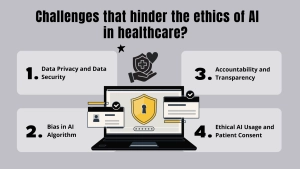
Ethical AI Usage and Patient Consent
While AI holds tremendous promise in healthcare, its adoption raises several ethical challenges that must be addressed to ensure patient safety and trust.
- Data Privacy and Data Security: AI systems rely on vast amounts of personal health data to function effectively. This raises concerns about the privacy and security of sensitive medical information. Ensuring that data is anonymized and protected from breaches is essential, especially as cyberattacks on healthcare application in India become more frequent.
- Bias in AI Algorithm: AI algorithms are only as reliable as the data they are trained on. Biased data can perpetuate healthcare inequalities, leading to disparities in care for underrepresented demographics. For instance, an AI system trained primarily on one group may not perform well for others. As a healthcare app development company, we prioritize using diverse and representative datasets to create equitable and effective AI solutions in healthcare.
- Accountability and Transparency: AI systems are often referred to as "black boxes" because their decision-making processes can be opaque. In healthcare, where decisions can mean the difference between life and death, it is important that AI systems are transparent and explainable. Doctors and patients need to understand how AI arrived at a particular diagnosis or recommendation to ensure trust and accountability.
- Ethical AI Usage and Patient Consent: Artificial Intelligence implementation in healthcare must prioritize patient consent and autonomy. Patients should be informed about how AI will be used in their diagnosis or treatment and can opt-out if they are uncomfortable. Furthermore, ethical frameworks should ensure that AI is used to enhance patient care, not replace the human touch that is vital in healthcare technology.
Traditional Healthcare vs AI-Powered Healthcare
| Aspect | Traditional Healthcare | AI-Powered Healthcare |
|---|---|---|
| Diagnosis Speed | Relies on manual analysis and experience | Analyzes large datasets quickly for faster diagnosis |
| Accuracy | Prone to human error and oversight | Supports data-driven, highly accurate decision-making |
| Patient Monitoring | Periodic check-ups and follow-ups | Real-time monitoring through AI and connected devices |
| Access to Care | Limited by location and availability | Remote consultations and 24/7 virtual support |
| Administrative Work | Time-consuming paperwork and documentation | Automated scheduling, records, and workflows |
| Personalization | Standard treatment approaches | Tailored treatment plans based on patient data |
| Preventive Care | Often reactive after symptoms appear | Predicts risks and enables early intervention |
| Operational Efficiency | Resource-intensive and manual processes | Streamlined operations with intelligent automation |
| Cost Management | Higher operational costs | Optimized resources and reduced healthcare expenses |
| Patient Experience | Limited engagement outside appointments | Continuous support through AI assistants and health apps |
Future Of AI in HealthCare
AI in healthcare has the potential to significantly improve patient care, diagnosis, and treatment in the future. Algorithms based on AI development are capable of accurately analyzing medical images and quickly identifying conditions to increase diagnostic precision. AI technology-powered techniques improve histopathology, and predictive models can forecast disease outbreaks and provide individualized treatments by examining genetic data, medical history, and lifestyle factors.
While wearable technology tracks health in real-time and facilitates early interventions, AI-integrated telemedicine platforms allow for remote consultations. With customized recommendations and instructional materials, AI enhances managerial efficiency and patient involvement.
AI-assisted robots improve accuracy in surgery by providing stability and immediate feedback. Furthermore, AI helps with medication research and healthcare policy by analyzing large databases and revealing key insights. AI will become steadily integrated with health care as it expands, from better data management to earlier detection of diseases like cancer or heart problems that will enhance patient outcomes. AI will play a key role in the future of healthcare development because of the potential to improve patient health while also saving the system a significant amount of money.