
table of content
- Introduction
- Understanding React.js
- Understanding Next.js
- Key Differences Between React.js and Next.js
- Which Should You Choose for Your Next Project: Next.Js or React?
- When to Choose React.js
- Use Cases for React.js
- When to Choose Next.js
- Use Cases for Next.js
- Cost to develop applications over ReactJs and Next.Js
- Conclusion
- FAQs


LLM Agent Vs Traditional Automation
Introduction
Automation has come a long way in the past decade. Businesses used to use rule-based systems to perform time-consuming operations, reduce errors, and improve productivity. Large Language Model (LLM) Agents are now revolutionizing how businesses think about automation, decision-making, and scaling.
In 2026, businesses are not debating whether automation is needed or not. Rather, the question is what type of automation will provide you with the most competitive advantage. It is important to distinguish between LLM Agents and Traditional Automation to respond to that.
In general, Traditional Automation is great for completing tasks that are set out for it to do. LLM Agents can visualize tasks, make decisions within the context of business operations, and are flexible, so they can adjust to different business needs.
This Blog is about the way these two methodologies use automation, their pros and cons, and why the most successful companies are increasingly reaching for intelligent agent-based systems to help them outpace evolving competition digitally.
What Is Traditional Automation?
Traditional automation is a technology platform that performs tasks based on predefined rules, logic, and workflows. These platforms are built to perform repetitive tasks in a consistent way without the need for continuous human intervention. Some examples of traditional automation are:
- Invoice processing
- Payroll management
- Data entry
- Email notifications
- Workflow approvals
- Scheduled IT operations
- Report generation
- Database updates
Traditional automation systems work according to a pre-defined set of instructions. Each action, condition, and response must be pre-programmed before it can be executed. Because of their predictable nature, they work extremely well in environments where processes are rarely changed and outcomes are predetermined.
How Traditional Automation Works
Traditional automation follows a structured workflow model. The process typically involves:
- Rule Definition: Business identify repetitive tasks and establish clear rules for execution.
- Workflow Configuration: Developers or automation specialists configure workflows that determine how the system should react under specific conditions.
- Trigger-Based Execution: Actions occur when predefined triggers are activated.
- Task Completion: The system performs actions according to the programmed logic and delivers a predictable outcome.
This approach is highly reliable but depends entirely on predefined circumstances and rules.
Benefits of Traditional Automation
Despite the rise of AI in 2026, some businesses still rely heavily on traditional automation.
Increased Operational Efficiency
Traditional automation automates repetitive business processes and allows workers to complete more work in less time by performing predefined tasks instantly and consistently.
Reduced Human Error
Traditional automation gives more accurate results, ensures consistency, and dependability by altering manual involvement in normal activities which reduces costly human errors.
Cost Savings
Organizations may reduce operational costs by automating labor-intensive operations, which reduces the resource needs, increase productivity, and optimize the returns on current investments.
Process Standardization
Traditional automation ensures every workflow follows the same predefined sequence, so businesses maintain compliance, consistency, and quality across operations.
Scalability
Automation enables businesses to manage growing workloads efficiently and handle larger transaction volumes and operational demands without proportionally increasing workforce requirements.
Challenges and Limitations of Traditional Automation
Traditional automation is good for businesses. It also has some problems.
Lack of flexibility
Automation uses fixed rules and workflows. This makes it hard for it to change when the business needs something or when something unexpected happens or when customers need something new.
Dependency on data
Most traditional automation systems need data that is organized and follows rules. This makes it hard for them to handle information that is not organized.
Inability to understand context
Automation can do what it is said, but it cannot understand what things mean or know how to respond to tricky situations.
Limited decision-making capabilities
Traditional automation is not good at making decisions on its own, so people must help when things get complicated.
Difficulty handling exceptions
When something unexpected happens or when the workflow is disrupted, traditional automation can fail. This means people must fix things by hand to get everything working again.
What Is an LLM Agent?
How Traditional Automation Works
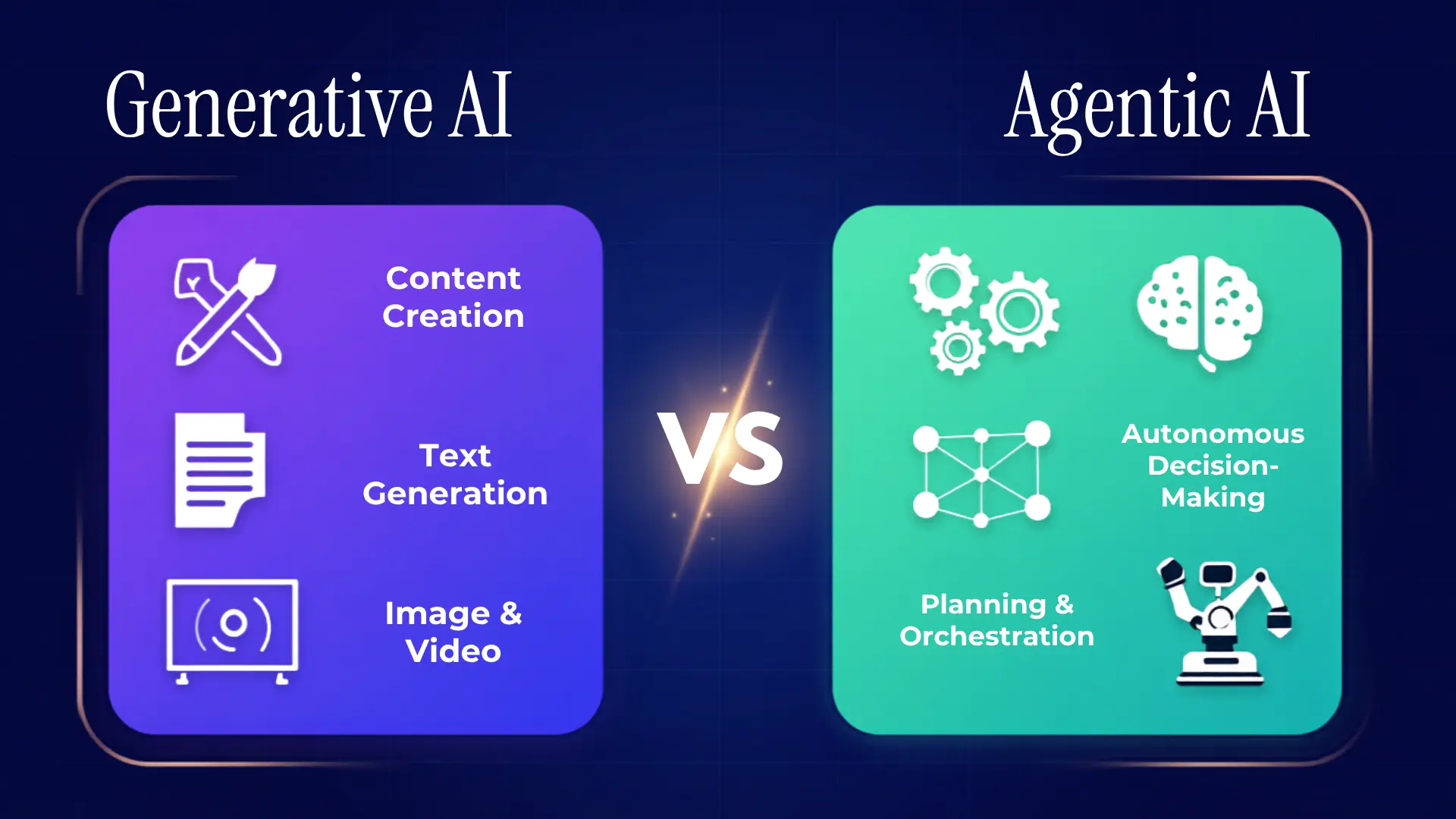
An LLM Agent is an AI-powered system that uses a Large Language Model as its reasoning engine to understand goals, make decisions, interact with tools, and execute tasks autonomously. Unlike traditional automation, LLM Agents are not limited to predefined workflows. They can:
- Interpret natural language
- Analyze context
- Generate responses
- Use external tools
- Access knowledge bases
- Make decisions
- Adapt to changing situations
Think of an LLM Agent as a highly skilled digital employee capable of understanding objectives rather than simply following instructions.
Instead of telling the system exactly what steps to perform, businesses provide a goal, and the agent determines the best path to achieve it.
How LLM Agents Work
LLM Agents combine reasoning capabilities with action-oriented workflows. A typical process involves:
- Goal Understanding: The agent interprets the user’s request and identifies the desired outcome.
- Planning: The system breaks the objective into manageable tasks.
- Information Gathering: The agent retrieves relevant data from internal systems, databases, documents, or APIs.
- Decision-Making: Using contextual understanding, the agent evaluates options and selects the most effective action.
- Execution: The agent performs tasks through integrated business tools and applications.
- Continuous Learning: Many agent-based systems improve performance through feedback loops and historical interactions.
This ability to reason and adapt makes LLM Agents significantly more powerful than traditional automation systems.
Benefits of LLM Agents
Companies are putting money into Artificial Intelligence agents because they can do things that regular automation cannot do.
Natural Language Understanding
Artificial Intelligence agents can understand and work with language in a natural way, so employees can talk to them like they would to a person without having to learn special commands or complicated procedures.
Making Decisions That Adapt
Unlike systems that just follow rules, Artificial Intelligence agents look at the situation to think about what’s changing and make good decisions that fit with what the company is trying to do.
Making Customers Happier
By giving customers personalized answers and suggestions that make sense for them, Artificial Intelligence agents help companies make customers happier more engaged and more loyal, which makes the service better overall.
Less Need for People to Get Involved
Artificial Intelligence agents can handle tasks on their own look at information and act, which means people do not have to watch over them all the time.
Solving Problems Faster
Using data and reasoning that takes into account the situation, AI agents can quickly find problems to suggest solutions and help companies make decisions faster.
Getting More Work Done
By taking care of administrative tasks and processing information Artificial Intelligence agents let teams focus on coming up with new ideas, planning and important business activities.
Managing Work Across Different Platforms
Artificial Intelligence agents can coordinate tasks across applications, systems, and departments, which makes it easier for people to work together and makes the whole business process more efficient.
Challenges and Risks of LLM Agents
Although LLM agents have significant potential, they also pose several new and continuing challenges for the organizations that utilize them.
Data Security Risks
Businesses often must secure a huge amount of sensitive corporate data using strong security frameworks and controls, including access controls, encryption technology, and governance procedures.
AI Hallucinations
Without adequate validation and oversight, it is possible for LLM agents to create inaccurate, erroneous, or random information that could have a negative impact on business decisions and results.
Compliance Issues
If a business operates within a particular regulatory environment, they must ensure that their AI systems comply with federal, state, and local laws, Industry standards, and internal corporate governance.
Integration Difficulty
Integrating Legacy Systems or other Cisco enterprise application systems into their data platform can present many challenges for businesses because the task can be complicated, time-consuming, and require a lot of resources.
Workforce Readiness
To successfully implement an LLM agent, employees must develop new skills; learn how to use AI tools properly; and understand how to work collaboratively with intelligent agents.
Governance and Accountability
There should be tightly defined guidelines, oversight processes, and standards of accountability to ensure that AI is properly utilized, and decision-making is transparent.
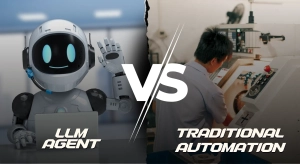
LLM Agent vs Traditional Automation: Key Differences
LLM Agent vs Traditional Automation
Why Businesses Are Moving Beyond Traditional Automation in 2026?
In recent years there have been many trends influencing organizations to implement intelligent automation; here are some key factors behind this movement:
- The explosion of unstructured data: Data from email, documents, chat, customer contacts, and multimedia channels has resulted in significant amounts of unstructured data being generated by modern businesses today which traditional automation methods have difficulty in interpreting, analyzing, and processing.
- Real-time decision making: The business world is moving fast these days. Companies need to make decisions to keep up with what is happening in the market, what customers want, and any problems that come up with. They need to be able to think on their feet and make choices away.
- Expectation: Customers want things their way now. They want businesses to know what they like and give it to them when they want it. They want to be able to get what they need from any device or place they’re at. So, companies need to find ways to give customers what they want when they want it and make them feel like it is for them.
- Workforce productivity goals: Business are using intelligence to help their employees do their jobs better. They are investing in technology to help employees work smarter so they can focus on real-time decision making and customer expectations. Come up with new ways to make the company better.
- Competitive pressure: Companies that utilize intelligent automation and AI agents will achieve a competitive advantage by operating faster, more efficiently, innovatively, and providing a higher level of service, which places additional pressure on their competitors to modernize as well.
The Hybrid Approach: Combining LLM Agents and Traditional Automation
The future is not about replacing traditional automation entirely. Instead, successful organizations are combining both technologies.
Traditional automation remains ideal for:
- Compliance workflows
- Transaction processing
- Data synchronization
- Financial operations
- Standardized procedures
LLM Agents excel in:
- Decision support
- Customer interactions
- Research tasks
- Process optimization
- Knowledge management
Together, they create a hybrid automation model that combines reliability with intelligence.
This approach maximizes efficiency while maintaining control and consistency.
Future of Business Automation: From Rules to Autonomous Systems
The next phase of digital transformation will entail the introduction of autonomous business systems. In the years to come, enterprises should expect:
Multi-Agent Workflows
Future companies will deploy multiple AIs working together across departments, systems and functions, enabling organizations to achieve faster completion of tasks as well as improved management of complex business processes.
Autonomous Decision-Making Systems
AIs will increasingly be tasked with overseeing operational decision-making posing minimal risk to the business with limited human oversight, through analysis of vast, structured or unstructured data sets, modelling how each potential decision will perform against a number of criteria before making the final decision based on company objectives.
Forecasting Future Business Operations
AI will be able to identify opportunities to mitigate risk, increase obstacles to operational activities, as well as provide opportunities for future growth prior to them materializing thereby creating the ability for businesses to define their response clearly and consistently, and in a timely manner when changes occur in their industry.
Working In Partnership with Humans
Instead of replacing human, the AI agents will support workers in completing their tasks so that resources can spend all their time working on strategic, innovative, creative and relationship-based functions of their job by automating all execution-related elements of the job.
Continuous Process Improvement
The future Automation Platforms will continuously monitor workflow performance, identify defects within that workflow and automatically implement workflow improvements; thereby continually improving overall business agility, productivity and operational excellence.
Conclusion: Which Automation Approach Is Right for Your Business?
We are living through a change in automation thanks to digital workflows. Many repetitive tasks still use automation methods, but they are not flexible enough for today’s fast-paced business world.
LLM Agents are a type of smart automation. They can reason, understand context, and make decisions on their own. They work alongside automation, making businesses more agile, efficient, and scalable.
The successful companies planning for 2026 and beyond will use both traditional automation and AI agents together. They will create workflows that increase productivity, improve customer experiences, and drive steady growth.
The future of automation is not about following rules. It is about building systems that understand what we want to achieve or adapt to changes and keep delivering value to businesses.