
table of content
- Introduction
- What Are AI Agents and How Do They Work in Business?
- Why Are Businesses Rapidly Adopting AI Agents?
- Key Benefits of AI Agents for Businesses
- Top AI Agent Use Cases in Businesses
- AI Agents vs Traditional Business Automation: What is Different?
- What Challenges Do Businesses Face While Implementing AI Agents?
- How Businesses Can Successfully Adopt AI Agents in 2026?
- The Evolution Beyond AI Agents: Enter Agentic AI
- AI Agents vs Agentic AI: Understanding the Shift in Enterprise AI Development
- How Agentic AI Will Shape the Future of B2B Operations
- Preparing Your Business for the Move Toward Agentic AI
- Conclusion


How are AI Agents Transforming Businesses in 2026?
Introduction
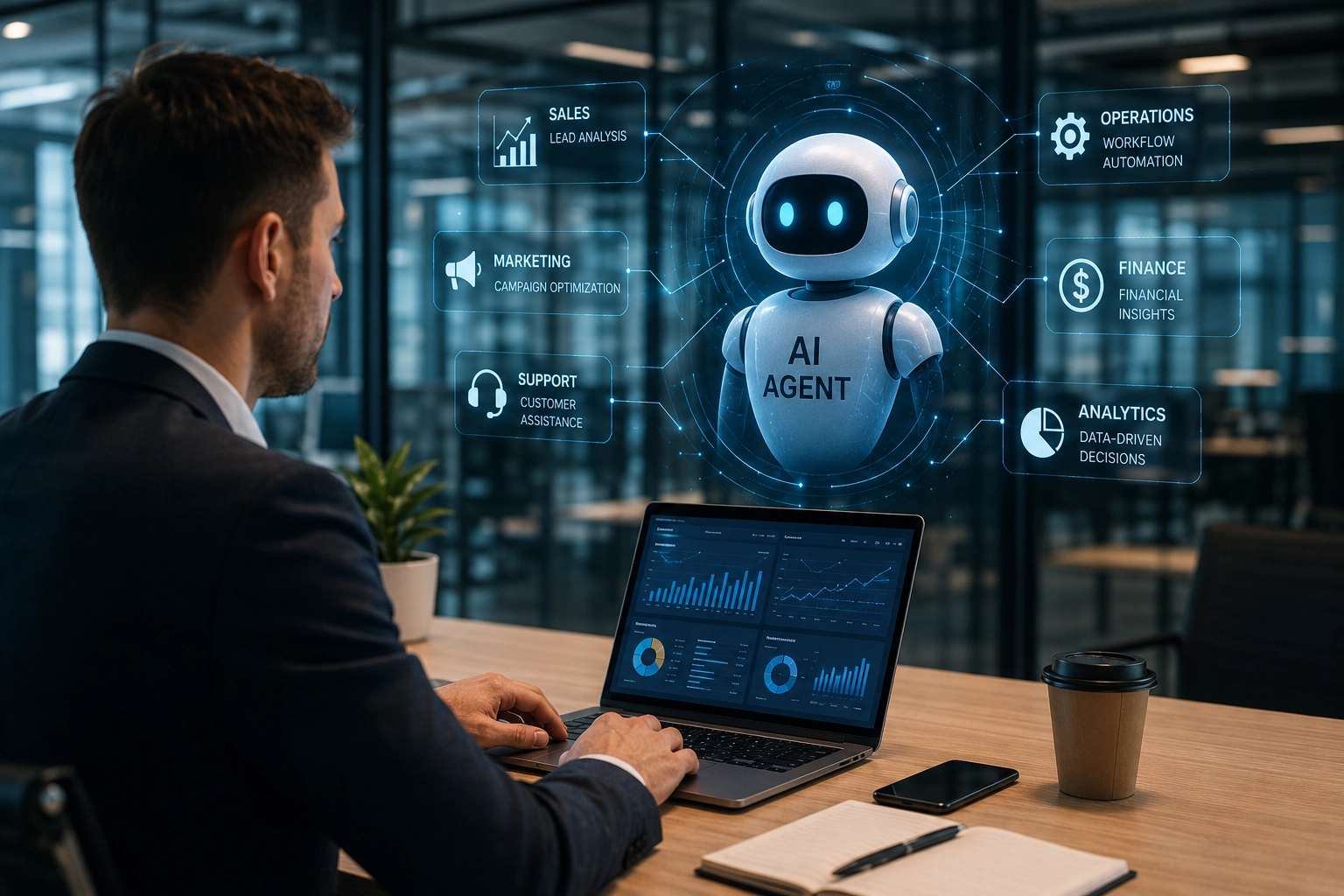
Artificial intelligence is no longer limited to chatbots or automation scripts. In 2026, businesses are entering a new era where AI agents are becoming active participants in operations, sales, customer service, decision-making, and enterprise workflows.
From automating repetitive tasks to managing complex multi-step processes, AI agents are helping businesses improve efficiency, reduce operational costs, and scale faster than ever before.
Organizations are now shifting from traditional automation to intelligent systems capable of understanding goals, making decisions, and executing workflows with minimal human intervention. This transition is laying out the foundation for what many experts now call the future of intelligent enterprises, Agentic AI.
In this blog, we will explore how AI agents work, why businesses are rapidly adopting them, their key use cases, challenges, and how agentic AI is shaping the future of business transformation in 2026.
What Are AI Agents and How Do They Work in Business?
AI agents are intelligent software systems designed to perform tasks autonomously by analyzing data, understanding objectives, and taking actions to achieve specific outcomes. Unlike traditional automation tools that rely on predefined rules, AI agents continuously learn and adapt based on data, interactions, and changing business environments.
These systems combine multiple artificial intelligence technologies, including:
- Machine learning for continuous improvement
- Natural language processing (NLP) for understanding human communication
- Computer vision for interpreting visual data
- Autonomous reasoning for decision-making and workflow execution
AI agents do not simply respond to commands. They can understand intent, create execution plans, interact with different software systems, and complete multi-step tasks independently under human supervision.
For example, a traditional automation tool may send an email when a lead fills out a form. An AI sales agent, however, can:
- Analyze lead quality
- Check CRM data
- Personalize follow-up messages Schedule meetings
- Update records automatically
- Recommend next actions to the sales team
This marks a significant shift from instruction-based computing to intent-based computing, where businesses define outcomes, and AI agents determine how to achieve them.
Why Are Businesses Rapidly Adopting AI Agents?
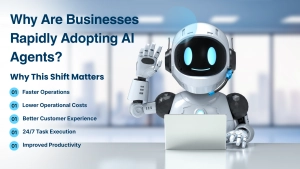
Businesses are under constant pressure to improve efficiency, reduce operational expenses, and deliver faster customer experiences. AI agents help businesses achieve these goals by automating both repetitive and intelligent tasks at scale.
In 2026, companies are increasingly adopting AI agents because they provide measurable business value across departments. Instead of replacing employees, AI agents are augmenting teams by handling time-consuming operational tasks, allowing human workers to focus on strategy, creativity, and relationship-building.
Several factors are accelerating adoption:
- Rising demand for operational efficiency
- Increasing labor and operational costs
- Need for faster decision-making
- Growing complexity of digital workflows
- Expansion of remote and hybrid work models
- Advancements in large language models and enterprise AI systems
Businesses are also recognizing that AI agents can work across multiple systems simultaneously, breaking down workflow silos and improving collaboration between departments.
Key Benefits of AI Agents for Businesses
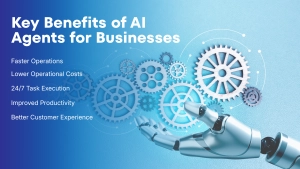
Faster Operations
AI agents can execute tasks significantly faster than manual workflows. They can process information, analyze data, and perform actions within seconds, reducing delays in operations. For example, customer service AI agents can instantly respond to queries, while procurement agents can compare vendor pricing automatically.
Lower Operational Costs
By automating repetitive tasks, businesses can reduce manual workload, minimize errors, and optimize resource allocation. This leads to substantial cost savings in operations, customer support, administration, and workflow management.
24/7 Task Execution
Unlike human teams, AI agents can operate continuously without breaks. This allows businesses to provide uninterrupted customer support, monitor systems in real-time, and maintain around-the-clock productivity.
Improved Productivity
AI agents help employees focus on higher-value tasks by eliminating repetitive administrative work. Teams become more productive because they spend less time on manual coordination and data handling.
Better Customer Experience
AI-powered customer interactions are becoming faster, more personalized, and more accurate. AI agents can analyze customer behavior, recommend solutions, and provide instant support, improving customer satisfaction, and engagement.
Top AI Agent Use Cases in Businesses
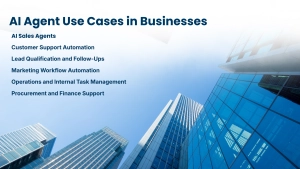
AI Sales Agents
AI sales agents are transforming businesses to manage leads, outreach, and customer engagement. These agents can qualify leads, personalize communication, automate follow-ups, and even assist with sales forecasting. Sales teams now use AI agents to:
- Identify high-intent prospects
- Generate personalized outreach emails
- Schedule meetings automatically
- Track customer interactions
- Recommend sales strategies
This improves sales efficiency while reducing response times.
Customer Support Automation
AI customer support agents can manage thousands of customer interactions simultaneously. They provide instant responses, resolve common issues, and escalate complex cases when needed. Modern AI support systems can also analyze customer sentiment and improve responses over time using machine learning.
Lead Qualification and Follow-Ups
AI agents can automatically evaluate incoming leads based on predefined criteria such as company size, engagement level, industry, or buying intent. They can then:
- Prioritize qualified leads
- Trigger personalized follow-ups
- Update CRM systems
- Notify sales representatives
This significantly improves lead conversion efficiency.
Marketing Workflow Automation
Marketing teams are using AI agents to streamline campaign management, content distribution, audience segmentation, and analytics reporting.
AI marketing agents can:
- Schedule campaigns
- Optimize email timing
- Generate performance insights
- Personalize customer journeys
- Recommend content strategies
This helps businesses run smarter and more data-driven marketing operations.
Operations and Internal Task Management
AI agents are increasingly managing internal workflows such as employee onboarding, document approvals, meeting scheduling, and project coordination. These agents reduce administrative workload and improve operational efficiency across departments.
Procurement and Finance Support
Finance and procurement departments are adopting AI agents for invoice processing, vendor management, budget analysis, and compliance monitoring. AI agents help reduce manual errors, speed up approvals, and improve financial visibility within organizations.
AI Agents vs Traditional Business Automation: What is Different?
Traditional automation relies on fixed rules and predefined workflows. It works well for repetitive tasks but struggles with changing conditions or complex decision-making.
AI agents, however, are adaptive and intelligent. They can learn from data, understand context, and modify actions based on business goals. Here’s the key difference:
This evolution enables businesses to automate not just tasks, but entire business processes.
What Challenges Do Businesses Face While Implementing AI Agents?
Despite the benefits, implementing AI agents comes with challenges that businesses must address carefully.
- Data Security and Compliance: AI agents often handle sensitive business and customer information. Organizations must ensure compliance with data protection regulations and implement strong cybersecurity practices.
- Integration Complexity: Many businesses operate across multiple legacy systems, making integration difficult. AI agents require seamless connectivity between CRMs, ERPs, communication platforms, and operational software.
- Reliability and Accuracy: AI systems are not perfect. Businesses must continuously monitor performance, validate outputs, and reduce risks associated with inaccurate recommendations or decisions.
- Human Oversight Requirements: Although AI agents can work autonomously, human oversight remains essential. Businesses must establish governance frameworks to ensure accountability, ethical usage, and operational control.
How Businesses Can Successfully Adopt AI Agents in 2026?
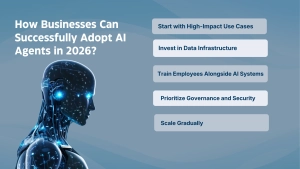
To maximize the value of AI agents, businesses need a strategic implementation approach.
Start with High-Impact Use Cases
Business should start by identifying workflows with repetitive, time-consuming, or data-heavy tasks. Customer support, lead management, and operations are often ideal starting points.
Invest in Data Infrastructure
AI agents perform best when connected to clean, organized, and accessible data. Businesses should improve data quality and integration before scaling AI adoption.
Train Employees Alongside AI Systems
Successful AI adoption depends on collaboration between humans and intelligent systems. Employees should be trained to work effectively with AI-powered workflows.
Prioritize Governance and Security
Companies must establish policies for data privacy, compliance, monitoring, and ethical AI usage to reduce operational risks.
Scale Gradually
Instead of attempting enterprise-wide implementation immediately, businesses should adopt AI agents in phases and optimize workflows continuously.
The Evolution Beyond AI Agents: Enter Agentic AI
While AI agents are transforming business operations today, the next evolution is already emerging: Agentic AI. Agentic AI refers to highly autonomous AI systems capable of independently planning, coordinating, reasoning, and executing complex business objectives with minimal human input.
Unlike basic AI agents that focus on specific tasks, agentic AI systems can manage interconnected workflows across entire organizations. This evolution represents the transition from automation assistance to autonomous enterprise operations.
AI Agents vs Agentic AI: Understanding the Shift in Enterprise AI Development
AI agents and agentic AI share similarities, but they differ significantly in capability and autonomy.
Agentic AI introduces advanced reasoning and coordination capabilities that allow multiple AI systems to collaborate and execute enterprise-wide objectives.
How Agentic AI Will Shape the Future of B2B Operations
Autonomous Decision-Making
Agentic AI systems will analyze business conditions, evaluate outcomes, and make operational decisions in real-time with minimal human involvement.
Multi-Agent Workflows
Future enterprises will use multiple specialized AI agents working together across departments such as sales, HR, finance, and operations.
Self-Managing Business Processes
Businesses will increasingly adopt self-optimizing systems capable of monitoring workflows, identifying inefficiencies, and improving processes automatically.
Intelligent Enterprise Operations
Agentic AI will enable enterprises to become more adaptive, predictive, and scalable by creating intelligent operational ecosystems.
Preparing Your Business for the Move Toward Agentic AI
Businesses preparing for the future of AI-driven operations should focus on building strong digital foundations today. Key preparation steps include:
- Modernizing legacy systems
- Improving data accessibility
- Investing in AI-ready infrastructure
- Developing AI governance frameworks
- Training teams for AI collaboration
- Encouraging innovation and experimentation
Organizations that begin adopting AI agents today will be better positioned to transition into fully intelligent enterprise environments in the coming years.
Ready to automate your business with CodeStore?
From intelligent customer support and sales automation to workflow optimization and data-driven decision-making, AI agents can help businesses streamline operations and unlock new opportunities for scalability. And as the industry moves toward Agentic AI, organizations that invest in AI readiness today will be better positioned to lead tomorrow.
At Codestore, we help businesses harness the power of AI through tailored solutions that align with their operational goals and digital transformation strategies. Whether you’re taking your first step into AI adoption or looking to scale intelligent automation across your organization, our experts can help you build secure, scalable, and future-ready AI ecosystems.
Connect with Codestore today to explore how AI agents can automate processes, enhance productivity, and drive sustainable business growth in 2026 and beyond.
AI Agents Are Reshaping the Future of Business
AI agents are fundamentally reshaping how businesses operate in 2026. From sales and customer support to operations and finance, these intelligent systems are enabling organizations to automate workflows, improve productivity, and deliver better customer experiences.
However, this transformation is only the beginning. The rise of agentic AI signals a future where businesses move beyond task automation toward fully intelligent, self-managing enterprise systems. Companies that strategically adopt AI agents today will gain a competitive advantage in operational efficiency, scalability, and innovation tomorrow.
As AI technology continues to evolve, businesses must prepare not just for automation, but for a future driven by intelligent collaboration between humans and autonomous AI systems.